Contacts

92 Bowery St., NY 10013

+1 800 123 456 789

Category: News

Changing lives, including my own
News

Changing lives, including my own

By James Grimm, MD

In 2015 the New York Times published a video, “Praying for a Cure”.  I have watched it many times, not believing the conditions under which these mentally ill individuals live.  Such confinement would hinder any treatment and they sadly often face a lack of options.

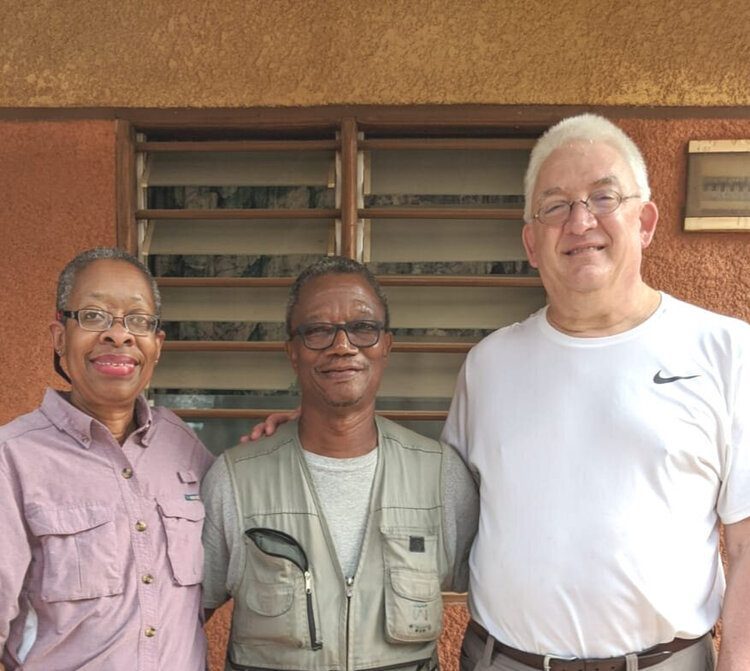
This was my introduction to the Association Saint Camille.  Its founder and director, Gregoire Ahongbonon, provided some initial comfort to my dismay.  His inspiration led to my first trip to Benin in January 2020. I was out of my professional comfort zone for the first time in years.  A tour of Saint Camille’s various treatment settings helped relieved any anxieties as I was greeted by clients singing and dancing. Equally uplifting was Saint Camille’s policy to provide care to anyone regardless of their ability to pay.  Such access gave hope for these individuals.

I will return to Saint Camille as it offered a practice of psychiatry that is both necessary and fulfilling.  There is no greater satisfaction than restoring someone’s dignity and allow them to achieve their potential.

Aurora Foundation Award
News

Aurora Foundation Award

Once again, our courageous founder, Gregoire, has been recognized by a prestigious organization.  He has been named an humanitarian by the Aurora Foundation in memory of the Armenian genocide. Below is an article written by the foundation.   Your continued support is greatly appreciated.

The Breaker of Chains

By Tigrane Yegavian

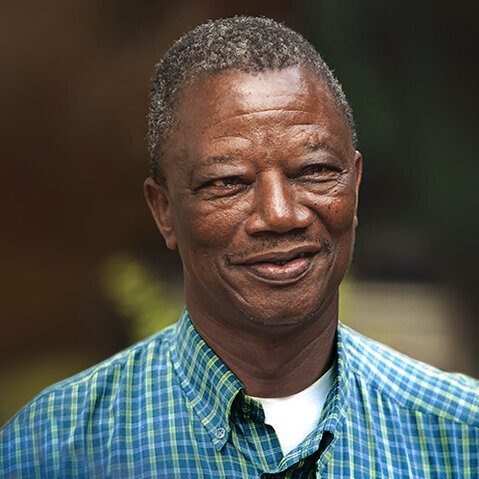
Grégoire Ahongbonon is the founder of the St Camille Association, which helps people in West Africa suffering from mental illness and seeks to end the inhumane local practice of keeping them in chains. A former mechanic turned mental healthcare activist, he has saved tens of thousands of people from suffering and even death, creating a community of like-minded individuals committed to paying it forward.

Born in 1952 in a Catholic family of a farmer and a housewife, Grégoire Ahongbonon grew up in the village of Kétouké, Benin. At 19, he moved to the Republic of Côte d’Ivoire to stay with a friend of his father’s in the small town of Toumodi, near Yamoussoukro, the country’s capital. He completed his training as a mechanic and settled in the local town of Bouaké, where he opened a thriving tire repair shop. Sadly, his good fortune didn’t last long.

The business soon went downhill, and around 1980, Grégoire Ahongbonon faced a period of great difficulty. It was so hard that the father of six children thought of committing suicide: “I had become miserable; I had lost everything in no time … I almost killed myself. I was lucky enough to meet a priest. He was a French missionary who took the time to listen to me and who supported me a lot.”

In 1982, this priest sent him on a pilgrimage to Jerusalem. It was a great turning point in his life, and Grégoire returned a deeply transformed man. “During this pilgrimage, I understood that the Church is the business of all Christians, and that it must be built. I asked myself this question: what was my stone to lay in its foundation?”.

Together with his wife Léontine, Grégoire started leading prayer groups and went to the Bouaké hospital to visit the sick. He discovered totally destitute patients, often abandoned in their rooms. “In Africa, patients who cannot afford to pay for their care are left to die. They are totally neglected, and this situation continues today,” laments Grégoire Ahongbonon. His vocation was found – he would seek God among the poorest.

In West Africa, many people with mental illnesses have no access to proper medical care.

“I had become a parent to these patients. I washed them, I found food and medicine for them,” explains the activist. He also went to prisons, a place of great suffering, where Grégoire helped set up a dispensary so that the nurses-in-training from the Bouaké Faculty of Medicine could provide assistance to the inmates. As if by a miracle, his business picked up again, and he used the money he earned to support the sick.

In 1990, Grégoire Ahongbonon came across a naked gaunt man in the streets of Bouaké, going through a trash can in hope of finding food. He couldn’t pass him by. “I saw Jesus in this wandering man with a mental illness. In Africa, everyone is afraid of these patients; they are the forgotten of the forgotten, abandoned by all. They are considered to be possessed by the devil. I had also had this prejudice, but I stopped being afraid,” recalls the activist.

In many African countries, people with mental illnesses are often abandoned or kept in chains by their families who cannot afford proper medical care and feel overwhelmed by dealing with the disease. Grégoire Ahongbonon went out to look for these people and discovered “men, women and children who sought to be loved, like everyone else.”

A year later, he created the St Camille Association. With his wife Léontine, he provided food and fresh water to the mentally ill, but there remained a bigger problem of finding a safe shelter for them. In 1993, Grégoire Ahongbonon garnered support from the Minister of Health, who provided the Association with a room of 2,400 m², where the first center for the mentally ill was opened a year later, on July 14, 1994.

Grégoire recalls a mentally ill person chained by his own parents in a remote village. His sister tried to save him, defying the family ban: “It was a terrible sight. This man was in chains, lying on the ground, deprived of food and water. Unfortunately, we were not able to save his life, but he was at least able to die with dignity.”

Grégoire Ahongbonon creates a community of people willing to help others.

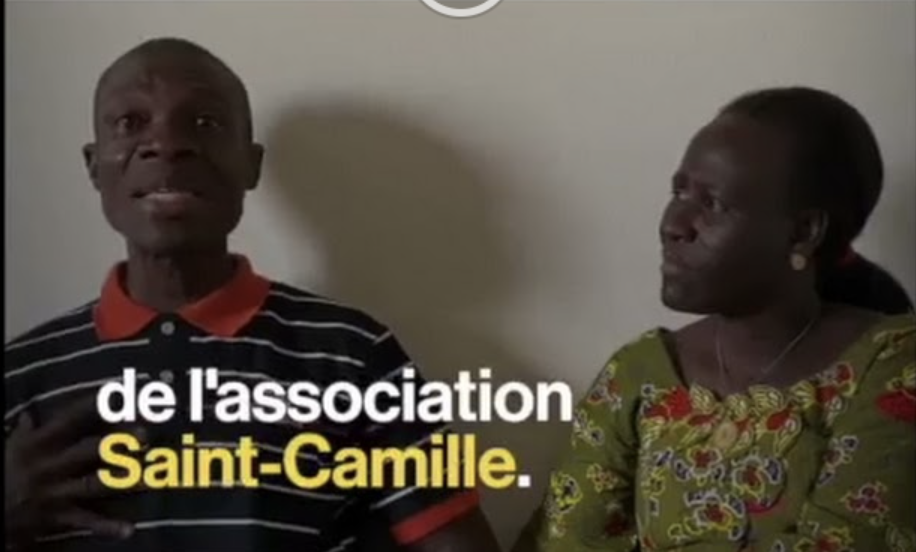
Since then, the St Camille Association founded by Grégoire Ahongbonon has opened 11 inpatient psychiatric centers, 63 outpatient clinics and 7 rehabilitation centers. Two of the latter ones recently closed because of the war. Today, the Association operates 79 institutions in Benin, Togo and in Côte d’Ivoire that have already treated around 100,000 people, some of whom have returned to their communities and resumed a normal life. Others stayed in the centers even after getting better, helping the less fortunate by becoming nurses. This is the innovative approach used by Grégoire Ahongbonon: the vast majority of caregivers and workers in these centers are themselves former mental patients. For him, helping others is the best way to thank them for the help one has received.

Like the Co-Founders of the Aurora Humanitarian Initiative, he has discovered the source of inspiration that is Gratitude in Action. “This message that the Armenians of Aurora are sending to us is perfectly in line with what we are going through at the moment,” he says enthusiastically. “We must support our brothers whether they are Christians or not, for God does not make any difference between us. We must free them from their chains to rescue them.”

Deserved Recognition
News

Deserved Recognition

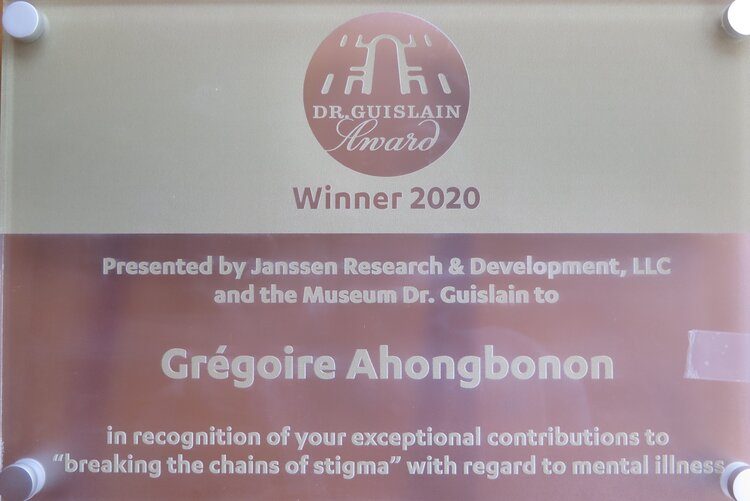
I am excited to share that on October 15, 2020 a big dream of mine for Association Saint Camille (ASC) came true. In communication many months ago between myself, and the leadership of Les Amis de la Saint Camille, we decided that a pivotal role for me as an American is to increase global recognition of the work.   I set about spending hours on the internet looking for possible awards for ASC.   When I saw the mission and vision of the Guislain award: Breaking the Chains of Stigma, the choice was obvious to me. Gregoire Ahongbonon has been fighting stigma for the “forgotten of the forgotten” for over thirty years.  After a long application process, I was notified by email in July that he was one of 13 finalists out of 50 candidates from 18 countries. At a later date, before the official announcement, we were told he had won – it was so hard not to tell anyone!  I was both joyful and relieved!  The prize money will be used to help move along the construction of the Addiction Center in Dassa, Benin.

In the words of the presenters:

“Grégoire Ahongbonon embodies the spirit of the Dr. Guislain ‘Breaking the Chains of Stigma’ Award, having both literally and figuratively freed those in West Africa from the shame and burden often associated with mental illness,” said Brother Dr. René Stockman, Superior General of the Congregation of the Brothers of Charity and Chairman of the Museum Dr. Guislain.

“Not only has Grégoire and the Saint-Camille Association improved basic care and treatment for those living with mental illness in West Africa, they have also brought dignity and confidence back into these patients’ lives,” said Husseini K. Manji, M.D., Global Head, Johnson & Johnson Science for Minds.

Gregoire said it well in a heartfelt thank you letter to my husband James and me: “This award will give more credibility to our NGO and comfort to our partners. It is a story of humanity for the happiness of the mentally ill, the great beneficiaries”.

The best moment of all was when Gregoire surprised us with a call from Benin.  With mutual laughter of his limited English and our limited French, it was a moment of shared joy and understood sentiment that I will never forget.

To view the ceremony:  https://youtu.be/A7pMkk9rjew

Jocelyn W. Bonner, MD   11-14-2020

Joka: a popular Beninese singer
News

Joka: a popular Beninese singer

Just in: Hear Joka discuss his recovery in his own words

By Benoît Des Roches, MD-psychiatrist

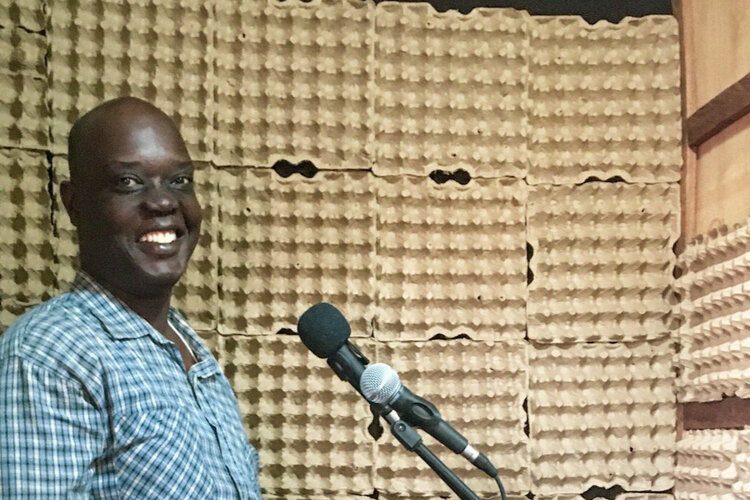
I met Joka, a well-known singer in Benin, in the Fall of 2019. He had had to be hospitalized for a serious chronic Bipolar disorder he had developed over time. He came out quite outspokenly to tell me about the hard times he and his family had gone through. He also gained much insight about his illness at Association St-Camille-de-Lellis where the mentally ill are cared for in West Africa and told me how he got increasingly compliant with his lifelong treatment. A warm, smiling and humble family man, here is Joka showing me around his new studio, at St-Camille’s Calavi Rehab Center, in the suburb of Cotonou, Benin, where he went back to composing those popular Beninese tunes he’s got the secret for.

Thanks, Joka, for all the good you are doing around you, as a credible spokesman for St-Camille’s cause: bringing back dignity for all humans, including the mentally ill!

Quebec, Canada

Gregoire at His Best
News

Gregoire at His Best

By Jocelyn W Bonner, MD

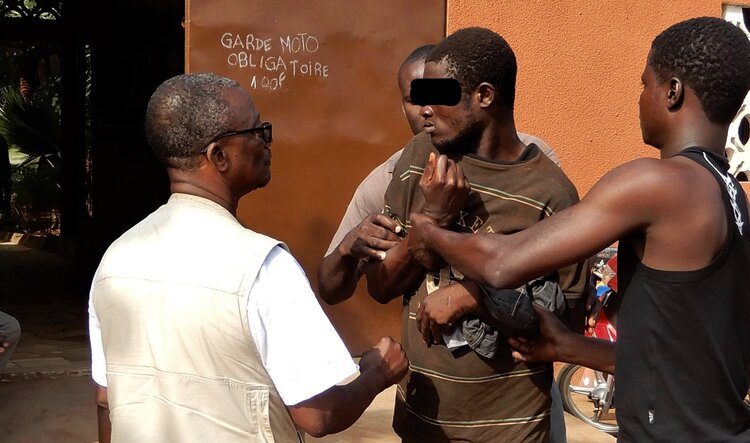
This man (face obscured) approached the Saint Camille Tokan residential program with his ankles in chains and legs bare in February 2019.  He is confused and fearful.  Gregoire (on the left) is doing what he does best:  talking to him as an equal and working to gain his trust.   The man stayed at Tokan for several months, being cared for by peers and receiving comprehensive mental health treatment.  He is doing well now and attends monthly outpatient visits. Gregoire exemplifies, in every interaction I witnessed with staff and patients, a driving humanity to change the plight of this man and countless others.

Saint Camille supports the training of nurses for 3 years at the School of Public Health in Burkino Faso at a cost of $1800 per year (inclusive of tuition, room and board).  They receive further training in mental health from the volunteer French and Canadian psychiatrists, who visit Benin on a regular basis and maintain availability by phone/video calls.   Please join Gregoire, the visionary founder of Association Saint Camille, in bringing dignity to the mentally ill in West Africa.

Covid-19 Update
News

Covid-19 Update

This information is current as of April 20, 2020 reported from our partner, Jean-Paul Cyr, President of Friends of Saint Camille in Quebec, Canada. He speaks to Gregoire nearly daily. Situation in Benin is this: there are officially 35 people infected and 5 deaths. In Togo: 43/3 and in Ivory Coast: 654/6. Everyone agrees that it would be better to multiply these numbers…by how much? (10? 100? more?). No one knows.

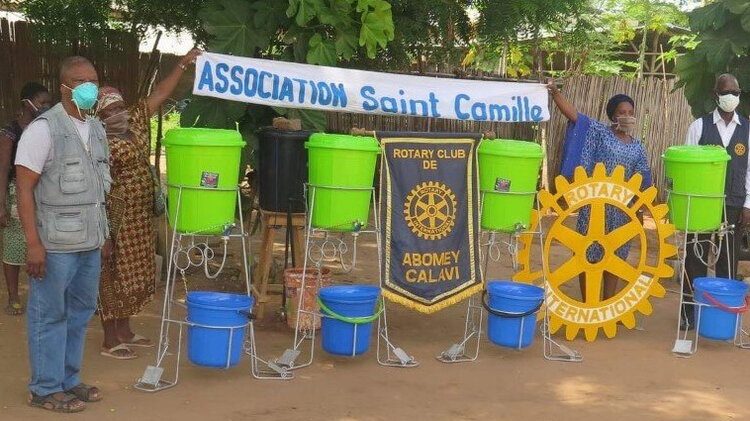
No patient has COVID-19 infection in any of the centers of Saint Camille. Gregoire equipped the centers with devices to wash hands and to take the temperature of any new patient. Roads are blocked to prevent travel but Gregoire is finding ways around them to deliver supplies and medications. Fear is well established in countries due to the weakness of health services and the difficulty in accessing them.

A large order of medication made by Saint Camille last December in India was delayed until April 8th due to the border closing and airport delays. Gregoire was able to secure a supplement at the Pharmacy of the State of Benin with money from Friends. However, two major medications were missing from the list used especially for the treatment of schizophrenia. Relapses have begun to occur.

As you can see, there are many effects of COVID-19, direct and indirect. Staff salaries are paid out of patient fees for medication.  Due to road blocks some patients cannot get to the clinic to pick up medications forcing a cut in salaries.   Please keep Saint Camille and all of the most vulnerable worldwide in your caring thoughts as I am at this difficult time for all.

Jocelyn W Bonner, MD

Year of Return – for the mentally ill
News

Year of Return – for the mentally ill

By Jocelyn W Bonner, MD

“Returning” to West Africa in January 2020 as an African- American psychiatrist was especially rewarding due to a site visit to Saint Camille Association in Benin. Gregoire, the founder, is gracious and humble, but with a fierce determination to better the lives of the mentally ill.

The most special day for me was seeing patients outdoors, under the palm trees, at the relay station in Ouidah. Relay stations are outpatient clinics set up to see patients primarily in follow-up or new patients to establish a treatment plan. Counseling and medications are options. Saint Camille uses whatever spaces are made available in the community. Parents brought in their 19 year- old daughter. She was short for her age, deaf, blind, intellectually impaired and aggressive since she had a bout of meningitis at age 10. Her mother showed us her hands where she had been bitten by her daughter.  I can still hear her father explaining to us, in English, her father explained there are no services for her “not like in your country.” Suggestions were made regarding medications by the clinic doctor and her father guided her away by her shoulders. He was grateful. I was astonished and sad for her, knowing the US resources that could easily make her life a little better. I met many families whose resilience in taking care of their loved ones left a lasting impression.

More encounters to follow.

By James Grimm, MD In 2015 the New York Times published a video, “Praying for a Cure”. I have watched it many times, not believing the conditions under which these mentally ill individuals live. Such confinement would hinder any treatment and they sadly often face a lack of options. This was my introduction to the Association Saint Camille. Its founder and director, Gregoire Ahongbonon, provided some initial comfort to my dismay. His inspiration led to my first trip to Benin in January 2020. I was out of my professional comfort zone for the first time in years. A tour of Saint Camille’s various treatment settings helped relieved any anxieties as I was greeted by clients singing and dancing. Equally uplifting was Saint Camille’s policy to provide care to anyone regardless of their ability to pay. Such access gave hope for these individuals. I will return to Saint Camille as it offered a practice of psychiatry that is both necessary and fulfilling. There is no greater satisfaction than restoring someone’s dignity and allow them to achieve their potential.
News

Pauline, Future Dressmaker

By Estelle Agboton and Serena Clayton

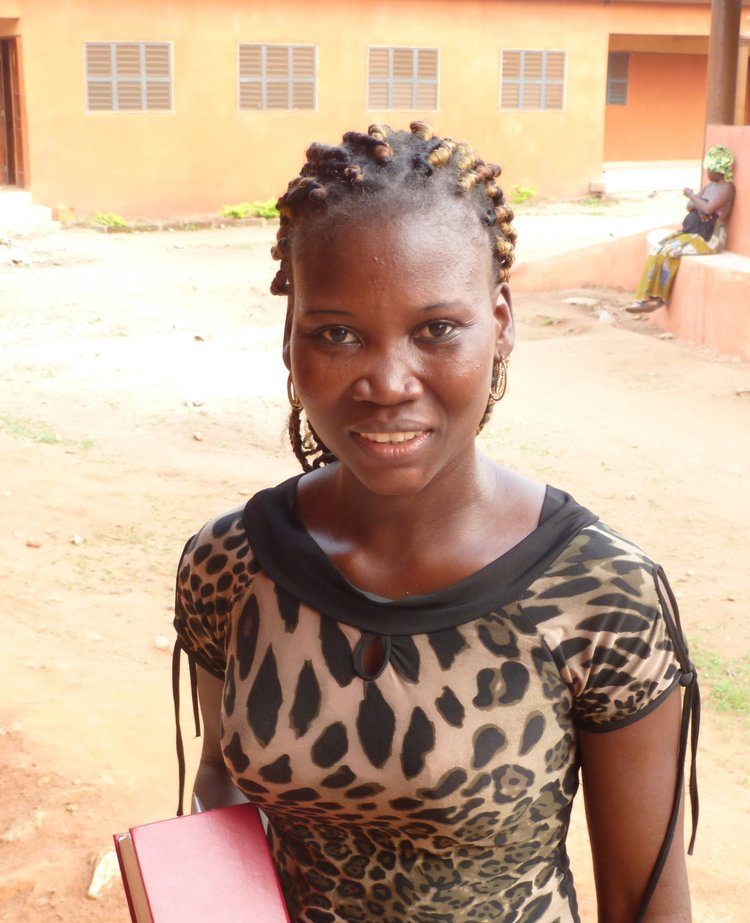
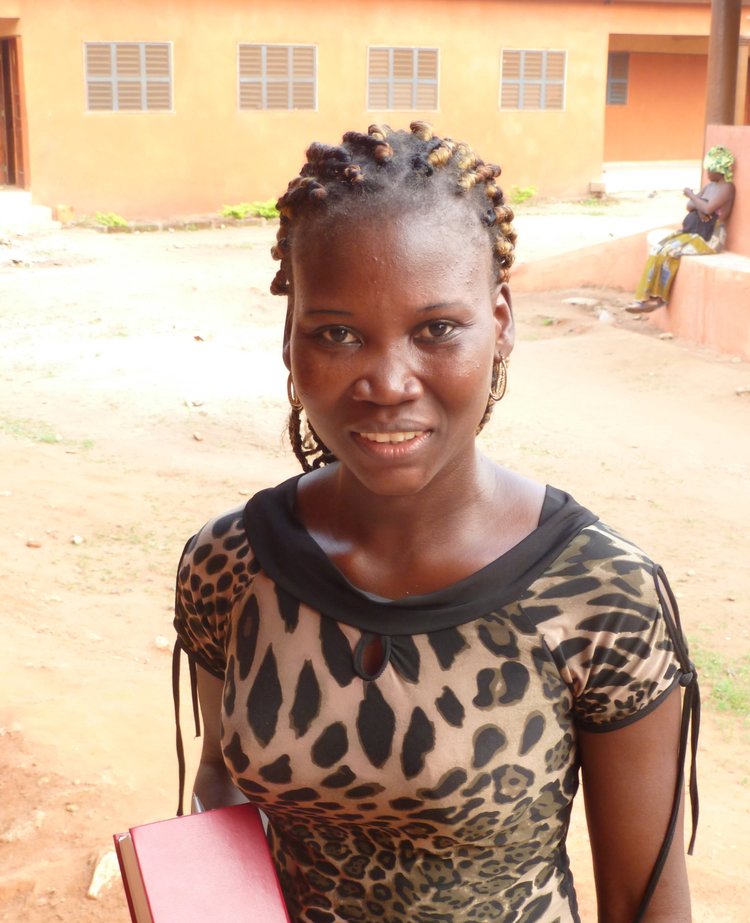
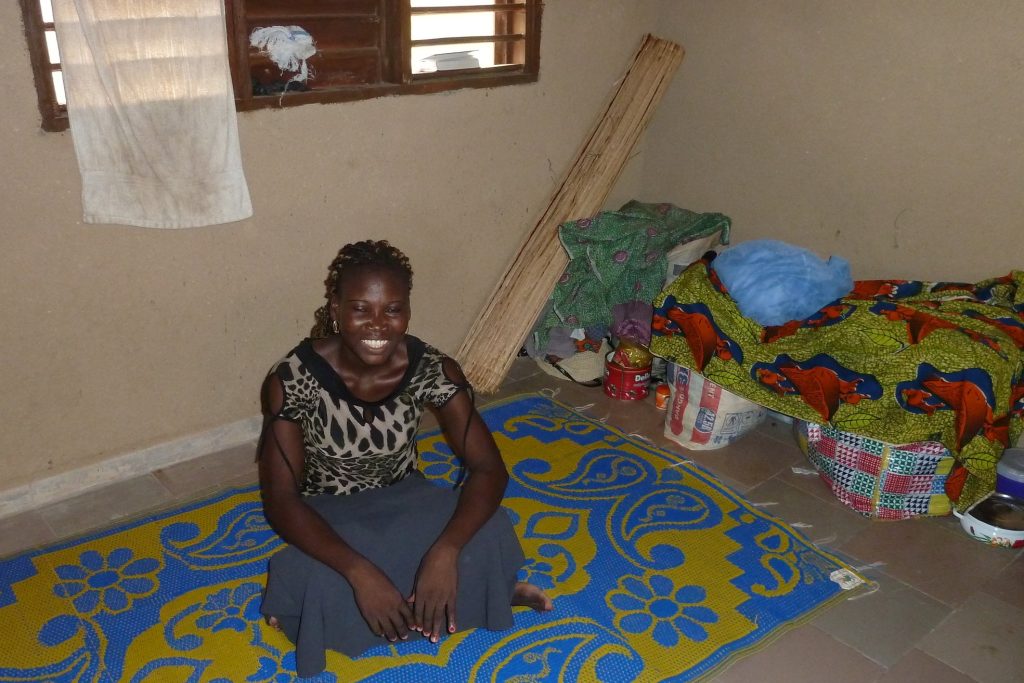
Pauline’s plan to become a great dressmaker was something she could never have imagined when she was being beaten to “cure” her delusions and uncontrollable behavior. Born in 1994 in a small city in the north of Benin, Pauline was well-loved by her parents and five siblings. But due to illness and financial hardship, she dropped out of school in third grade and was sent to work as a servant in a family home. After a few years, the family accused her of robbery and sent her to a religious leader to force her to confess which precipitated a mental breakdown. She refused to speak, heard voices and became aggressive. The family sent Pauline back to her parents who took her to evangelical churches and fetish worshipers where she drank herbal teas and was beaten by healers, none of which seemed to help. Pauline’s condition worsened over the next several years until 2015 when her family learned about the work of St. Camille. They took Pauline to St. Camille’s dispensary in her home town where she was evaluated and given medication. Within two weeks, she was markedly improved. She then agreed to enter St. Camille’s residential program in Djougou where she became part of a supportive therapeutic community. She has now graduated to the rehabilitation center at Calavi where she is learning sewing and her plan to become a great dressmaker is within reach.

By James Grimm, MD In 2015 the New York Times published a video, “Praying for a Cure”. I have watched it many times, not believing the conditions under which these mentally ill individuals live. Such confinement would hinder any treatment and they sadly often face a lack of options. This was my introduction to the Association Saint Camille. Its founder and director, Gregoire Ahongbonon, provided some initial comfort to my dismay. His inspiration led to my first trip to Benin in January 2020. I was out of my professional comfort zone for the first time in years. A tour of Saint Camille’s various treatment settings helped relieved any anxieties as I was greeted by clients singing and dancing. Equally uplifting was Saint Camille’s policy to provide care to anyone regardless of their ability to pay. Such access gave hope for these individuals. I will return to Saint Camille as it offered a practice of psychiatry that is both necessary and fulfilling. There is no greater satisfaction than restoring someone’s dignity and allow them to achieve their potential.

By Estelle Agboton and Serena Clayton

Pauline’s plan to become a great dressmaker was something she could never have imagined when she was being beaten to “cure” her delusions and uncontrollable behavior. Born in 1994 in a small city in the north of Benin, Pauline was well-loved by her parents and five siblings. But due to illness and financial hardship, she dropped out of school in third grade and was sent to work as a servant in a family home. After a few years, the family accused her of robbery and sent her to a religious leader to force her to confess which precipitated a mental breakdown. She refused to speak, heard voices and became aggressive. The family sent Pauline back to her parents who took her to evangelical churches and fetish worshipers where she drank herbal teas and was beaten by healers, none of which seemed to help. Pauline’s condition worsened over the next

By James Grimm, MD In 2015 the New York Times published a video, “Praying for a Cure”. I have watched it many times, not believing the conditions under which these mentally ill individuals live. Such confinement would hinder any treatment and they sadly often face a lack of options. This was my introduction to the Association Saint Camille. Its founder and director, Gregoire Ahongbonon, provided some initial comfort to my dismay. His inspiration led to my first trip to Benin in January 2020. I was out of my professional comfort zone for the first time in years. A tour of Saint Camille’s various treatment settings helped relieved any anxieties as I was greeted by clients singing and dancing. Equally uplifting was Saint Camille’s policy to provide care to anyone regardless of their ability to pay. Such access gave hope for these individuals. I will return to Saint Camille as it offered a practice of psychiatry that is both necessary and fulfilling. There is no greater satisfaction than restoring someone’s dignity and allow them to achieve their potential.

several years until 2015 when her family learned about the work of St. Camille. They took Pauline to St. Camille’s dispensary in her home town where she was evaluated and given medication. Within two weeks, she was markedly improved. She then agreed to enter St. Camille’s residential program in Djougou where she became part of a supportive therapeutic community. She has now graduated to the rehabilitation center at Calavi where she is learning sewing and her plan to become a great dressmaker is within reach.

Grand opening of the first center in Togo, the Oasis of Love
News

Grand opening of the first center in Togo, the Oasis of Love

On the morning of the opening of the Oasis D’Amour (Oasis of Love) in Kpalime, Togo, patients from St. Camille’s centers Benin greeted visitors and dignitaries. The Oasis D’Amour is St. Camille’s first full treatment center in Togo, and patients from Benin had ridden in style in a large air conditioned bus to be part of the day of festivities.

Across the street, a band played; trombones ,trumpets, drums of all shapes and sizes played by musicians of varying ages and heights. Women in bright clothing danced with their children. As the band played, the contingent from Benin joined in and lined up to dance to the doors of the new center.

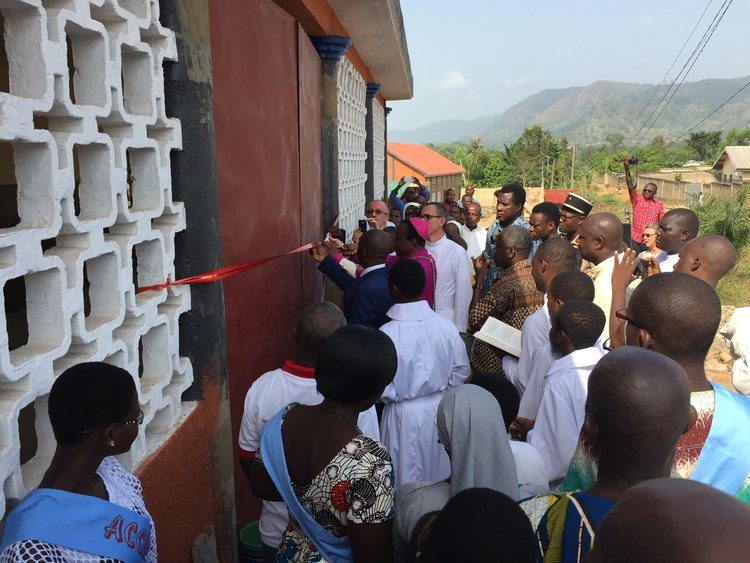
With St. Camille’s founder, Gregoire Ahongbonon and at the helm, prayers were read and acknowledgements were given before the great pink ribbon was cut.

Five days before the ribbon cutting, the center had opened for patients. On the first day, two people, a man and a woman of indeterminate ages, both dirty, emaciated in ripped clothing appeared at the door. Both appeared disoriented and unable to speak. They had been brought to the center by townspeople who knew they needed help. They were washed, fed, given beds and started on psychotropic medications.

Another woman, Fabienne, came with her father. Fabienne told in heartbreaking emotion, about how she had been chained to a tree in a prayer center all day, even forced to urinate in front of others. She cried with anger and humiliation as she told her story. Gregoire listened intently, took her hand and encouraged her to come to Benin where he promised she could work in the center and get training to become a nurse.

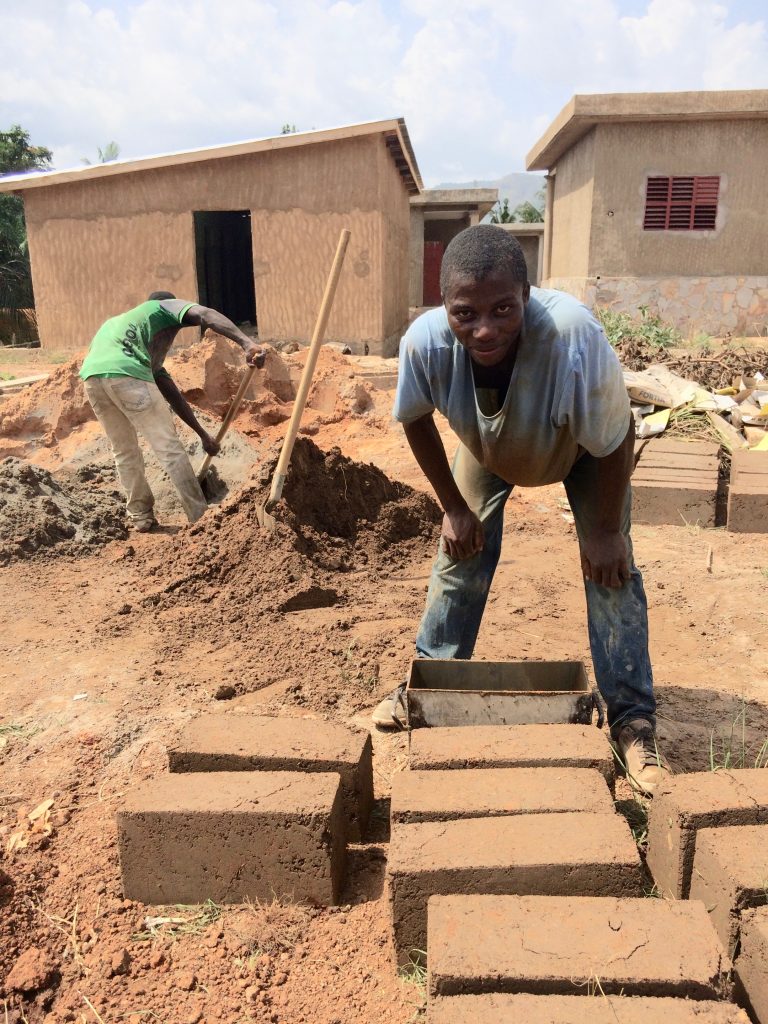
On the day the first patients arrived, the center had hardly been ready for the dignitaries. Men were hammering, sawing and making bricks. There were sinks to install, walls to be painted, and lights to be wired. The entire floor of the church still needed to be tiled. Some 200 men from across Togo and Benin yelled orders and instructions at each other in Fon, Kabiya, Mina, Ewe and French.

One of those men was 38 year old Ghislain. Ghislain had been a law student at the University of Abomey in Benin when things began going haywire for him. He started to hear voices and became paranoid. He tried to concentrate on his school work, but the voices became too loud and they drowned out his studies. He was only able to finish a year of school. His mother was frightened, and took Ghislain to the hospital. But still he faltered. She then learned of Gregoire’s treatment center and brought Ghislain. There he was given medication for his schizophrenia. At first, he said, he felt fatigued and listless, but after two weeks the voices in his head stopped. Ghislain began to work for Gregoire, first doing art projects with other patients. Now five years on, he is in charge of ordering and distributing supplies for the production of the Kpalime center. “It would be very difficult, if I had not met Gregoire, perhaps I would be in the streets, just walking,” he says. “I feel gratitude for what he has done for me, because now I can do many things, because I am well.” Ghislaine says in the future he would like to return to Benin, get married and have a family. He wants to return to his studies and help those who are in prison or mentally ill.

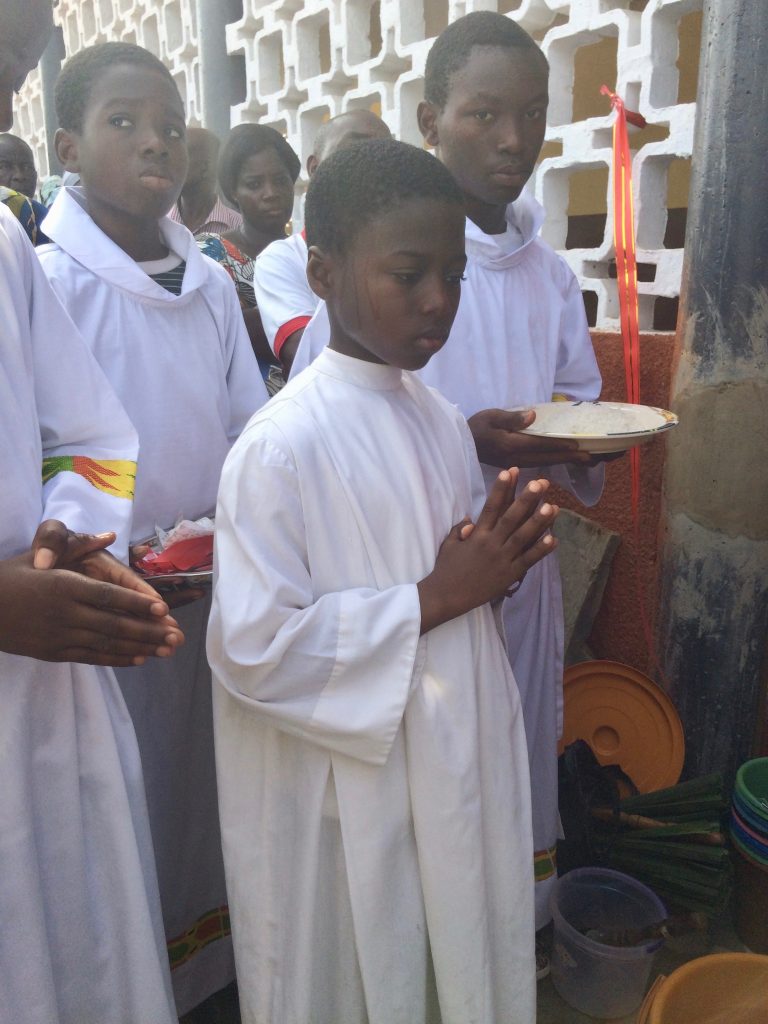
Five days later, when the grand opening finally arrived, a procession led by four altar boys stepped over the church threshold. The first carried incense and the last carried a large wooden cross; the floor was tiled, the fans were spinning, and the room was filled with music.

Gregoire tells the audience to remember that the mentally ill are no different from anyone else—they are people who have an illness that, like any other illness, requires treatment. He exhorts community members to actively support the Oasis d’Amour because it will allow the community to care for the mentally ill with dignity and respect.

Every seat in the church is taken.  As the temperature reaches upwards of 90 degrees, one woman lays down on the cool church floor behind the last row of seats. More than a hundred chairs had been set up outside, nearly all of them were filled. It is here, in a plastic chair, Gregoire sits. He gets to his knees and prays and then returns to his seat. As the services plays out inside, he closes his eyes for a moment of much deserved rest. Tomorrow he will be back on the road looking for new opportunities to serve the “forgotten of the forgotten.”